
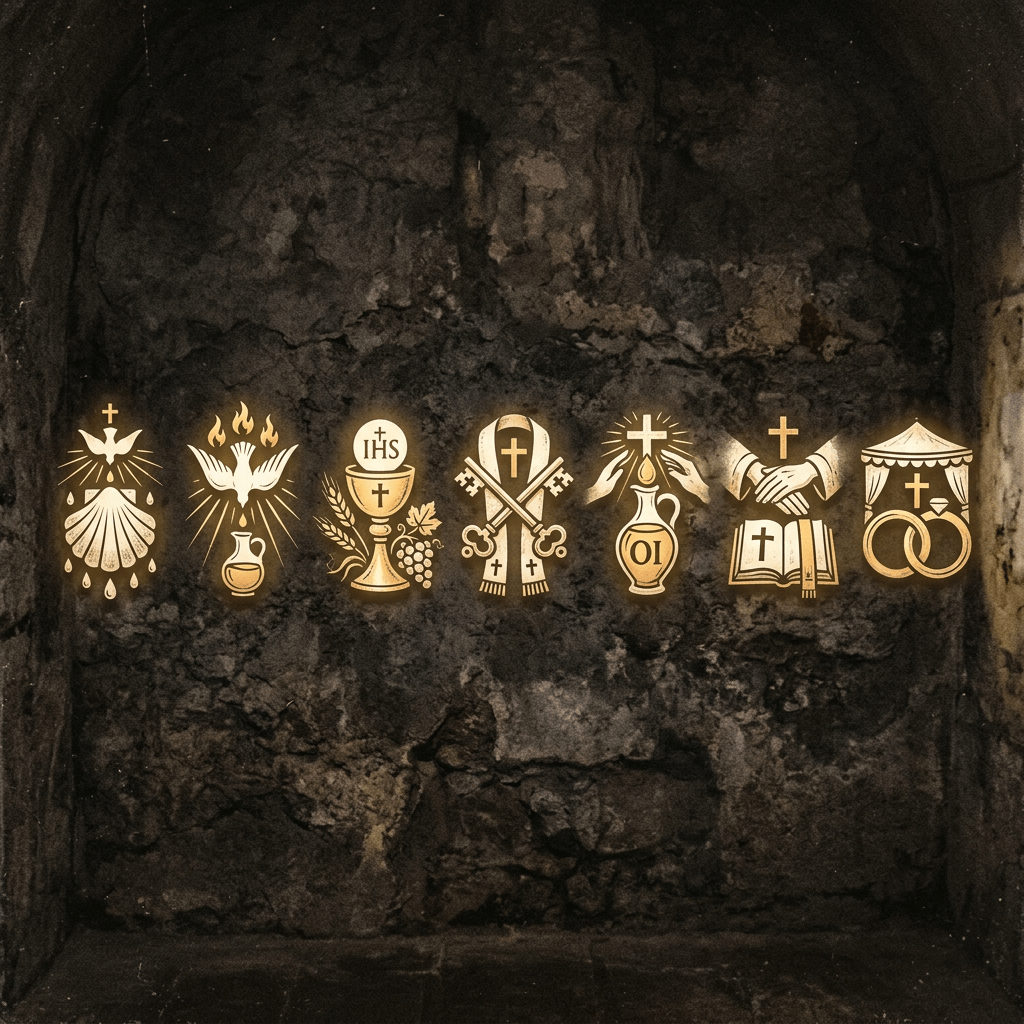
The text discusses the debate among Protestant sects regarding the legitimacy of certain sacraments, emphasizing their biblical origins. It cites various scriptures to support sacraments like Baptism, Confirmation, Holy Eucharist, Penance, Extreme Unction, Holy Orders, and Matrimony, arguing for their importance in Christian doctrine and tradition.
Tag: traditional catholic
A Companion to the Summa Volume I – Book Report Part 2

A Companion to The Summa Volume I by Walter Farrell, O.P., offers an accessible exploration of Catholic dogma, adhering to St. Thomas Aquinas’s teachings while engaging modern readers. Covering topics like the existence of God and the nature of creation, it aims to inspire understanding and reflection on timeless truths amidst contemporary challenges.
God is Truth (an Excerpt from “A Companion to the Summa Volume I,” Part 1 of a Book Review)

“A Companion to the Summa” by Walter Farrell explores the knowledge of God, emphasizing His omniscience and essence as truth. The text argues that true understanding encompasses not only good but also the knowledge of evil. Farrell asserts that God’s immutable nature reveals the divine essence, shaping all reality and truth.
Explanation of the Types of Grace, Possibility of Salvation without Baptism/as well as the Flaw in the Reformation’s Salvation by Faith Alone – Part 2 of a Book Review on the “Catholic Doctrine of Grace”

The Catholic Doctrine of Grace by Father George Hayward Joyce, published in 1920, explores the concept of grace within Roman Catholic theology. It distinguishes between sanctifying grace and actual grace, emphasizing that faith alone is insufficient for salvation. The book critiques Protestant views, particularly Martin Luther’s doctrine of justification by faith alone, advocating instead for a comprehensive understanding of grace and moral actions required for justification.
The last 7 sentence Jesus Christ Spoke from the Cross Before Dying

During Easter, reflecting on Jesus’ last words enhances understanding of His sacrifice. Key statements, sourced from a 1965 pamphlet, include expressions of forgiveness, care for His mother, thirst, and His final committal. These words, intertwined with Psalms, illustrate hope, the establishment of the Church, and divine triumph through His death.
Church or Bible Which Was Appointed by Christ to Teach Mankind the True Religion -The Truth about Catholics

The pamphlet “The Truth about Catholics” discusses Catholic apologetics, specifically countering the Protestant belief in “Sola Scriptura.” It argues that Christ’s directives to the apostles established the Church’s authority for salvation and teaching, rather than the Bible alone. The text emphasizes the chaos resulting from individual biblical interpretation.
Pentecost
Pentecost marks the final significant event following Christmas and Advent, celebrated as the Church’s birthday. On this day, the Father, in collaboration with Jesus Christ, sends the Holy Ghost to guide the Church, fulfilling the promise made to assist it until the end of time.
Understanding Mary’s Role in Christianity: A Theological Perspective
Last Sunday was Mother’s Day, and the author’s blog this week focuses on the significance of Mary in Christianity. Citing scripture, they emphasize how Jesus entrusted Mary to all believers, portraying her as an intercessor rather than an object of worship. The piece underscores Mary’s perpetual virginity and her model role for women.
Ascension Thursday
Ascension Thursday marks a significant Holy Day reflecting the acceptance of Jesus Christ’s sacrifice by God the Father. The infinite nature of Christ allows His sacrifice to remain effective throughout time, renewed in the Mass. Prior to 1968, Catholics believed the Mass was the unbloody continuation of Calvary, a belief now mostly held by traditional Catholics.
A Sermon On Lent Part II by St Augustine from Fathers of the Church Pamphlets
These holy days which we are devoting to the observance of Lent remind me to speak to you about fraternal agreement, so that whosever has a complaint against another may bring it to and end lest he himself come to an end. Do not despise these words, my brethren. For, by reason of the Fact that this mortal and frail life, which is passed amid so many earthly temptations and which prays that it may not be overwhelmed by them, cannot be lived even by a just person without some sins, we have a remedy by which we can live because our Teacher, God, taught us to say in His prayer: ‘Forgive us our debts, as we also for give our debtors.’ [Matt. 6:12] We have done what was stipulate and what was pleasing in the eyes of God, and we have signed the agreement for cancelling our debt.
 Traditional Thomistic Catholic