Tag: Mystical Body of Christ

  • The Mystical Body of Christ’s Differentiation of Roles Such as Priest and Bishops Selected by the Church 

    The Mystical Body of Christ’s Differentiation of Roles Such as Priest and Bishops Selected by the Church 

    My belief is that on the road to Emmaus (Luke 25:13-35) is where some information not written in the Bible comes from by tradition in the Catholic Church where Jesus Christ explains Old Testament references to some disciples. But why did they not write it down, a letter possibly entitled: the Lords talk on the way to Emmaus? Because the two disciples were probably illiterate and they, over the course of their lives, passed on the information by word of mouth.

    The Ethiopian understanding that he needed Philip’s help to understand the Bible (Acts 8:26-40) is why you need an apostolic church and there can really only be one visible apostolic church otherwise you don’t know who to ask. These things make us part of one coherent body – the Mystical Body of Christ.

    The born again quote by Christ (John 3:3) means we are born again into the kingdom of God, not as white, black, Asian, Caucasian, Russian, Chinese, Korean, German, Italian, Greek, Japanese, Filipino, Mexican, Columbian, Canadian or American but as Roman Catholics (Galatians 3:28). The tower of Bable, the separation of mankind is repaired in the universality (the Greek Katholico meaning universal) of the Roman Catholic Church (even in the Churches name the 2 great ancient civilizations are joined – Greek and Roman). The common language of the Roman Catholic Church has been Latin for a millennia and a half – 1500 years. This common language made it possible for priest in different counties to talk to each other to coordinate operations such as the rescue of Jews during WWII just to use a recent example.

    The death on the cross is the consummation of Christs wedding with his bride because his death gives us the privilege of being born again into the Kingdom of Heaven as adopted sons and daughters of God.  Just as the marital act, an act produce by the will of at least one of two parties, can but won’t necessarily produce children between a man and a woman, Jesus Christs death won’t necessarily produce a citizen of heaven in any particular human being, but just as the marital act, might. Just as with Adam and Eve and the whole of salvation history, every one is the result of the cooperation of at least 2 people but their ultimate destiny is in their hands.

    The whole concept of the mystical body of Christ is introduced most clearly in 1 Corinthians 12:12-27 which says: 12 For just as ithe body is one and has many members, and all the members of the body, though many, are one body, jso it is with Christ. 13 For kin one Spirit we were all baptized into one body—lJews or Greeks, slaves1 or free—and mall were made to drink of one Spirit.

    14 For the body does not consist of one member but of many. 15 If the foot should say, “Because I am not a hand, I do not belong to the body,” that would not make it any less a part of the body. 16 And if the ear should say, “Because I am not an eye, I do not belong to the body,” that would not make it any less a part of the body. 17 If the whole body were an eye, where would be the sense of hearing? If the whole body were an ear, where would be the sense of smell? 18 But as it is, nGod arranged the members in the body, each one of them, oas he chose. 19 If all were a single member, where would the body be? 20 As it is, there are many parts,2 yet one body.

    21 The eye cannot say to the hand, “I have no need of you,” nor again the head to the feet, “I have no need of you.” 22 On the contrary, the parts of the body that seem to be weaker are indispensable, 23 and on those parts of the body that we think less honorable we bestow the greater honor, and our unpresentable parts are treated with greater modesty, 24 which our more presentable parts do not require. But God has so composed the body, giving greater honor to the part that lacked it, 25 that there may be no division in the body, but that the members may have the same care for one another. 26 If one member suffers, all suffer together; if one member is honored, pall rejoice together.

    27 Now qyou are the body of Christ and individually rmembers of it.

    Priest by tradition are thought of as “altus Christus” or other Christs, this is why they are called “father” as the head of the parish family, with the local parish/church as the bride of Christ. That this is the correct interpretation can be found in Galatians 2:19-21

    19 For I, through the law, am dead to the law, that I may live to God: with Christ I am nailed to the cross.

    20 And I live, now not I; but Christ liveth in me. And that I live now in the flesh: I live in the faith of the Son of God, who loved me, and delivered himself for me.

    21 I cast not away the grace of God. For if justice be by the law, then Christ died in vain.

    Paul’s love for his “parishioners” or diocese as a bishop not because of the law directly, but if he loves his parishioners then he will not drift from the law (Galatians 5:14), but it is the love of God through Paul exemplified by Jesus Christ’s life and death on the cross that informs his actions.

     There are different functions in the same community/body: “some apostles [bishops], some prophets, some and others some evangelists, and others some pastors [priests] (Ephesians 4:11).  This is show that Jesus Christ envisioned there being different functions in his church and it makes sense that who-should -be-what should be selected by merit by the church as Mathias was as a replacement to Judas by the apostles or those who would be their successors – present day bishops. This concept is reinforced in 1 Corinthians 12:28.

    The fact that the guiders or principals of a religion, usually priests (empowered to offer sacrifice for/with the people of the religion), were selected by God, is not new.  In fact it was the case in the precursor of the Roman Catholic church the Jewish religion.  In the Jewish religion the priest were picked by natural law (decedents of Levi and specifically Aaron for high priests Exodus 18:1-5).  To allow for peoples other than Jews to be selected, supernatural law, selection by the apostles, guided by the Holy Ghost, as in the case of Mathias, was the rule in Jesus Christ’s Catholic Church. Christ said He came to fulfil the (Jewish) law not to abolish it. if this is true, after 2 of the most important books in Jewish law: Leviticus and numbers, were written for priest why would Jesus Christ, as suggested by Martin Luther, abolish the priesthood as differentiated from unconsecrated Christians? He would not. In the Old Testament in the book of Numbers chapter 16 God showed what he thought of priests as having a separate vocation from unconsecrated people when He physically and destroyed Korah’s rebellion when Korah and his hoard suggested otherwise. Many would say “but there was also so much describing dietary restrictions.” My reply to that would be: those were all removed when in Mark 7:15 Jesus Christ basically said there is nothing outside of a man that enters into him that can defile him, but the thing that proceeds from him that is what defile him.

     The information in the square brackets was added for emphasis and clarity to the original bible quotes.

  • The Mystical Body of Christ, Sanctifying Grace, and the Function and need for Sacraments Explained – book review “Of Sacraments and Sacrifice” by Clifford Howell, S.J. including the quoted explanation referred to above

           This a book review on “Of Sacraments and Sacrifice” by Clifford Howell, S.J., published by The Liturgical Press, St. John’s Abbey, Collegeville, Minnesota, copyright 1952. With:

    NIHIL OBSTAT

    Iaonnes Eidenschink, O.S.B., J.C.D.

    Censor Deputatus

    IMPRIMI POTEST

    Daniel H. Conway, S.J.

    Provincialis

    Missourii Provinciae

    +Balduinus Dworschak, O.S.B.

    Abbas

    Sancti Ioannis Baptissae

    IMPRIMATUR

    +Petrus W. Bartholome, D.D.

    Coadiutor Episcopus

    Sancti Clodaldi

    Die 29a octobris, 1952

    The following is a large quote from Chapter Two which is entitled The Good Tidings, which, in my opinion, clearly puts all of salvation history, the reasons for what happened, and what sanctifying grace is, in clear focus, at high level. (square brackets indicate lines and bible verse cites not in the original) :

    [Cradle Catholics, i.e. Catholics from birth not converts] . . . learned our religion when we were children.  We took it in gradually, absorbing it from our environment of home and school and church. Very early we were taught elementary truths about God, our Lord, our Lady, guardian angels and some saints; we learned some prayers by heart. We were told that God would be pleased if we did certain things, and that He would not be pleased if we did other things.  If we pleased God we were on our way to heaven, and if we offended God we might end up I hell.  At school we had formal and more explicit teaching which developed all these foundation-truths in further detail, and showed us the relationship between these truths and our duties and our prayers.

            Gradually there was formed in us a certain attitude towards God; we learned to regard God primarily as our Creator, and as the Rewarder of good and evil.  We saw our place in the scheme of things – as creatures temporarily in this world for the purpose of making our way to heaven.  We learned that Christ, by His death on calvary, had opened the gates of heaven to us; that He founded an infallible Church to guide us, to tell us what is right and what is wrong, and to provide us with marvelous helps, called sacrament, whereby we are aided to do good and avoid evil. And the Church has an official act of worship – the Mass – in which the fruits of Calvary are applied to our souls.

       Through the infallible Church, then, we can know with certainty what to believe (our creed); from the Church we have reliable guidance as to what to do (our code); in the Church we have opportunity for adequate worship (our cult).  Creed, code and cult – that is religion.  This (with a lot of details filled in) more or less summarizes what we learned when young.

        And, of course, it is all perfectly true. But we must ever remember that what we learned when young could be absorbed by us only in an immature way; our minds were so limited in their capacity that nothing deeper could be grasped. We must not imagine that our school-Catholicism is and adequate equipment for life.  Just as we grew up in other respects, so we need also grow up in our religion – to have a mature outlook and grasp of all its implications.  The pity of it is that the religious mentality or outlook or attitude (it is difficult to hit on precisely the right word) of enormous numbers of Catholics remains the same (fundamentally) as that which was formed in their youth.  They remain permanently immature in their religion.

         To make the point clearer, think of a schoolboy who is beginning to learn chemistry.  All he will learn will be that within the mental capacity he then has – the mere rudiments of the science.  He will learn the main properties of solids, liquids and gases; change of state; mixtures and compounds; preparation of a few elements and compounds, and a bitt about acids, bases and salts.  That is about all he can manage for a long time.  Doubtless he takes a boyish delight in the colors of solutions and precipitates in the stinks and bangs produced in experiments – and he thinks he is getting along splendidly with his chemistry.

         Yet he has no conception of the fascinations that await him later, when he matures.  In the course, when intellectually capable of absorbing them, he learns such matters as the atomic theory, the periodic table, electrolytic disassociation, stereo-isomerism, atomic structure, isotopes . . . he finds that in chemistry there are delights of the mind which exceed beyond description and delights which he previously derived from the colors and smells of his early experiments.  His whole outlook on the science of chemistry has completely out grown his child like views.  There, of course, do not become false: it remains true that A plus B makes a color and C plus D makes a smell and E plus F makes a bang.  But it is now clear to him that chemistry amounts to a great deal more than that sort of thing!
         Just so, when we were boys and girls learning our religion, we absorbed certain information and formed a certain point of view of outlook on our creed, our code, and our cult.  And we thought we were getting a good grip on our religion.  So we were – but only as far as our then immature minds could grasp it.  And just as the small boy busy with smells and colors and explosions has no idea of the wonder of “adult chemistry,” so we, in our youth, could have no idea of the wonders of what we might call “adult Catholicism.”

         By which I do not just mean Catholicism as it is actually grasped by millions of people over the age of twenty-one. This alas, is so often of the same kind as that which they grasped in their youth. While maturing physically (and perhaps even intellectually in many ways) they have failed to mature religiously. What I do mean by “adult Catholicism” is that which involves a grasp of matters corresponding to the atomic theory, periodic table, tautomerism and so on of my chemical analogy.

         And what matters are these? Chiefly the meaning of supernatural life, the “Mystical Body” doctrine, the relationship of Christians to Christ and to each other in terms of these; the “corporateness” of justification through Christ, of worship with Christ and of salvation in Christ; Catholic life of Mass, sacraments, liturgical year and so forth as seen from this angle.

         All these contain wonders and delights for the mind, heart, soul and even body far surpassing whatever elements of our religion we managed to grasp in our youth. Not that we learned then becomes in any way false – of course not.  It certainly is true and remains true that we must keep the commandments, obey the Church, frequent the sacraments, and go to Mass. But from what is called the “liturgical outlook” (which embodies that adult Catholicism I have tried to describe), it becomes clear that Catholicism amounts to infinitely more than this! 

         Of all the things that have to be explained I am inclined to think that the most fundamental – that which comes logically first – is the idea of supernatural life, or sanctifying grace (to give it its other name). If this is understood, then “Mystical Body” doctrine becomes intelligible. And once that is grasped, all the rest of the “liturgical outlook” can be built up upon it and expressed in terms of it.  Hence I shall tackle first of all this subject of “supernatural life.”

         And the obvious point from which to begin is natural life. We are familiar with three forms of it – plant life, animal life, human life.  Precisely what life is we do not know; that is a question which biologists have never solved and probably never will solve.  But that does not prevent us from knowing a lot about life. We know that each form of life is limited to its capabilities.  Plants cannot do animal things, and animals cannot do human things.

        On a beautiful spring morning a thrush may experience such a feeling of well-being that he opens his beak and expresses himself in exquisite song.  The daffodils at the foot of his tree may be equally thriving in their own way – but they cannot sing about it.  Yet a man who likewise feels that life is particularly good that morning might very well sing – through his song would have words to it because speech is within the power of human nature. Suppose, however, that a thrush which had strayed into Missouri burst forth into a nostalgic ditty about his “Old Kentucky Home,” then he would not be acting according to his nature.  He would be acting according to human nature, which is above his own. Now the Latin word for “above” is super. Hence this imaginary thrush would be acting supernaturally – doing something supernatural.

         Another example.  The different forms of life act differently with regard to their food.  Plants wait for it to come to them (in the form of soluble salts from the earth). Animals go and get it (whether it be grass in a field or deer in a forest).  Man not only procures his food but, when he wants to, he also cooks it.  Now if a barren fig tree started wandering round in search of a nice succulent dung-hill or if a wolf were discovered rigging up a spit on which to cook a newly killed deer, each would be acting supernaturally.  The tree would be acting according to animal nature; and the wolf according to human nature.

         The only possible explanation for such behavior would be that somehow the tree had become endowed with a share in animal nature, and the wolf with a share in human nature. For each would be doing something for which it does not, by its own nature, possess the requisite powers.  It must, therefore, be sharing in that type of life which belongs to a nature above (super) its own – that is supernatural life.

         Of course there are not, in fact any thrushes, fig trees or wolves capable of these astonishing supernatural actions!  We can only imagine them, and are powerless to make these creatures of our imagination exist in reality.  But that does not apply to Bod.  He can not only imagine anything imaginable, but, if He wants to , He can create it as a reality.  So far as we can make our He has not desired to make any plants or animals share in the type of life higher than their own natural life (unless, perhaps Balaam’s loquacious ass was an instance [Numbers 22:21-38]).

          But he has done it in the case of man! For He has invited man to share in divine happiness. And that is not natural to man at all.  The happiness natural to man is human happiness; divine happiness is what is natural to God.  To enjoy it is therefore a divine activity, above human nature.  If man is to do that, them he has to act supernaturally; for that he needs supernatural life of the type corresponding to the activity.   For divine activity he would have to have a share in divine life.

           And that, best beloved, is precisely what God has given him!  Beside his natural life he is given “a created participation in the divine nature” (as theologians call it), and this makes him capable of certain activities which belong properly to God alone and exceed the powers of human nature. In particular, man thereby becomes capable of enjoying God’s perfections – that is, of being happy in the way that God is happy (not in a merely human way). This is called the “beatific vision.” And because man has not right whatever to this created participation in the divine nature, and has it only through God’s goodness or graciousness, it goes also by the name of grace.

         Beyond doubt many Catholics do not see this point with any vividness.  They do not think of grace as sharing in God’s own life and powers.  Their notions are a bit hazy and inadequate.  They regard grace, for instance, as a beautiful garment of the soul which makes it pleasing in God’s sight; or else as a kind of ticket of admission into heaven.  Which is rather like regarding the health (say) of a young man as the good color of his cheeks or as the doctor’s certificate whereby the qualifies for some job.

         These notions have, indeed, a measure of truth, but they are two superficial, and grace, when viewed this way, does not seem to be anything very exciting.  Fut if it is thought of and understood as a life – as a sharing in that sort of life which belongs by nature to God alone – then it is prized as something unspeakably wonderful, resulting in utterly astounding consequences which entrance the mind and warm the heart.

         The first consequence id that when we are given grace we cease to be merely ordinary men and women and become, as it were supermen. We are lifted above the natural plane on which all other creatures exist, and are brought into the closest intimacy with God Himself. For, without ceasing to be God’s creatures, we become also God’s sons.  We are His sons and daughters in a very real and true sense. Not in the same sense that Christ our Lord is the Son of God – for He is begotten by the Father in the seme divine nature as the Father’s own.  Our sonship is not by nature, but by adoption.

         But this means far more than human adoption.  If a man adopts a son he may treat the boy in every was as if he were his own son; yet the fact remains that the life of the boy was not imparted to him by the man whom he has learned to call “Father.” Adoption in the human plane is but a fiction.  But adoption by God involves a fact – we become truly God’s sons because God does actually impart to us His own type of life (natural and uncreated in Him, supernatural and created in us).  And since we have life from God we really are His sons – not by way of convention, but in fact.  When we call God “Our Father” we name Him truly.

          And a second consequence is that, being sons of God, we are heirs to heaven. We are not, indeed, enjoying God’s kind of happiness yet – our bodies have to die before that happens. But we are definitely qualified for or equipped for enjoying that kind of happiness. We have already got those powers with – when we come into the appropriate circumstances – will enable us to see and enjoy God in the beatific vision.  Men without the supernatural life of grace are like men born blind and living in a dark cellar.  Even supposing they were to be led out int the light they could still see mothing.  But we, who have grace, are like people with the power of sight.  At present we see nothing, or almost nothing, of God because we are still in the darkness of this earthly life.  We only see God by faith “as through a glass, darkly.” [as part of this Biblical quote – 1 Corinthians 13:8-13, we have the phrase “when that which is perfect has come” which of course refers to God and heaven”]

         But we know that we have the power to see him – we are not blind.  We can look forward to being delivered from our dark cellar, passing through h the door of death.  Then we shall emerge into the light of God’s glory and shall be able to “see Him face to face.” [1 Corinthians 13:12] That is what grace does for us!

         Those of us who have this life of grace are enormously privileged.  For nobody has any right to it whatever.  And not everybody has it – though, but for a fearful tragedy at the very beginning of human history, everybody might have had it.

          When God first created Adam and Eve He gave to them not only their natural human lives, but also this life of grace we have been discussing here.  And besides that He gave sundry lesser privileges – one of which was that though Adam and Eve were mortal (that is, capable of dying) they were in fact going to be spared death.  After some time spent in a knowledge of God, imperfect yet sufficient to guide them in living according to God’s will, they were to be granted the full and perfect knowledge of God (with attendant perfect happiness) in the beatific vision.  They would come to this without having to die first.  So would all their descendants.  That was God’s original loving and generous plan.

         But unfortunately Adam did not do God’s will – he preferred his own will.  Instead of pleasing God he chose to please his wife.  By thus insulting and disobeying God he committed the first, or “original” sin.  Now we must always remember that God is not only infinitely good, but He infinitely just.  It would not have been consistent with His justice to go on giving privileges to rebels!  So the privileges were discontinued, and Adam was given his rights – and only his rights.

         Nothing really due to him in virtue of his human nature was taken away from him – only the “extras.”  So he was now no longer exempt from death.  Worse still, he now had only his natural human life – which, as we have seen, is not sufficient for enjoying the beatific vision.

         The consequences of this were appalling!  For Adam could not pass on to his children what he didn’t have.  His children were born as Adam himself had become – destined to die and possessing no kind of life except natural life.   No supernatural life. No capacity for enjoying God. No share in the divine nature.  No filial relationship with God.  The same with the next generation – and the next – and the next – and so on for all time, right down to us and beyond us.

         Unless God had done something about it, this meant that all generations of the human race were ruined – rendered incapable of enjoying God in heaven.  Even if, by some strange supposition, they could get to heaven they would not know they were there; for they could no more enjoy God than a blind man could enjoy a lovely view.  Lacking any share of in the divine life, they could not act according to divine nature in enjoying divine happiness.

         This is the condition in which all of us came into existence.  It is a condition which would never have been were it not for the original sin committed by Adam.  That is why it is called the “state of original sin.”  It is not that we (or any other newborn babes) had actually done anything wrong or offended God in any way.  Not at all.  But the point is that we had nothing except that to which we were entitled by our status as human beings.  Everything which was our due we were given: God did us no wrong in creating us like this.  Nevertheless the fact remains that even with the fullest and most perfectly developed of human powers we still could not get to heaven.  That can only be done by a privilege – the privilege of sharing in God’s kind of life by possessing grace.

        How, then, was grace given to us?  The answer t o those questions s the most astonishing and beautiful story in the world. It is the most moving revelation of God’s infinite wisdom, of His inexhaustible power and – above all – of his boundless love. 

          “By this hath the charity of God appeared towards us, because God hath sent His Only-begotten son into the world, that we may live by Him,” [1 John 4:9] says St. John.  There came, as a member of the ruined human race, the very Son of God!  He was the Son of God the Father, not by adoption, but by nature.  Divine life was natural to Him.  Yet, when He was made flesh and dwelt amongst us, human life was also natural to Him.  And as he shared our human life, He brought it about that we could share His divine life.  “I am come,” He said, “that they may have life, and have it more abundantly.” [John 10:10]

         The disobedience of Adam under the tree of Paradise was wiped out by the obedience of Christ on the tree of the Cross.  All of us entered this world subject to the death sentence, and equipped with merely natural powers, because the life which we had was only natural life derived for Adam.  But now we look beyond temporal death to ternal life, which we can enter with supernatural powers provided that we have super natural life derived from Christ.  Our natural life came to us by a process of natural generation from Adam. And the marvelous thing which Christ had done is to arrange that supernatural life may come to us by a process of supernatural generation from Himself.  He has brought it about that we may be related to Him in the supernatural order in a way which parallels our relationship to Adam in the natural order.

         Thus He is the “Second Adam.” “Adam,” as St. Paul wrote to the Romans, “was the type of Him who was to come . . . If one man’s fault brought death on a whole multitude, all the more lavish is God’s grace, shown to a whole multitude – that free gift He has made us in the race brought by One Man – Jesus Christ!” [Romans 5:14,17] Or, as he reminded the Corinthians, “just as all have died with Adam, so with Christ all may be brought to life.” [1 Corinthians 15:22]

        This life which Christ won for us, and which He imparts to us, is the very kernel of the Christian message; that He has raised us up above our natural plane unto sonship of God the Father and brotherhood of Himself is the essence of the “Gospel” (which means ‘good tidings”). An understanding of the why and the how of all this is the key to our creed; a vivid consciousness of it is the motive of our code; and a joyously intelligent reaction to it is the inspiration of our cult.  The doctrine of sanctifying grace, in fact, illuminates, informs and enlivens our whole religion and leads us on to comprehend “in all its breadth and length and height and depth the love of Christ – to know what passes knowledge!”[Ephesians 3:18-19]

         How jejune, by contrast, is that view which sees in our religion little more than a collection of “do’s and don’ts” coupled with a set of aids for the avoidance of sin and the collection of merits all aimed at the ultimate welfare of the individual. Yet how many there are who seem to get but little further than this . . .

         The above quote is the most surface look at what sanctifying grace is, from chapter two of the book, just enough to show you how incredibly important sanctifying grace is and why any human should care a great deal about it.  The table of contents below gives you an outline of what the rest of the book will be covering.

    Contents:

    Part One  Of Sacraments

    Why Worship?                                                       3

    The Good Tidings                                                 12

    Sharing Divine Life                                               23

    Of Things Visible and Invisible                           34 

    The Making of a Christian                                   45

    Increase of the Body                                            56

    The Health of the Mystical Body                       68

    Part Two  Of Sacrifice

    The Meaning of Sacrifice                                   81

    Man’s Yearning                                                    93

    What Happens at Mass                                    103

    Completing the Sacrifice                                  114       

    The Mass is a Liturgy                                         124

    Problems of Participation                                135

    Liturgical Piety                                                    153

    DISCUSSION QUESTIONS                                  164

    This is a book every Catholic needs to read, so take time to check it out of your local library, get an inter library loan if you have to or buy it if you can.
  • The Role of Tradition in Catholicism Explained

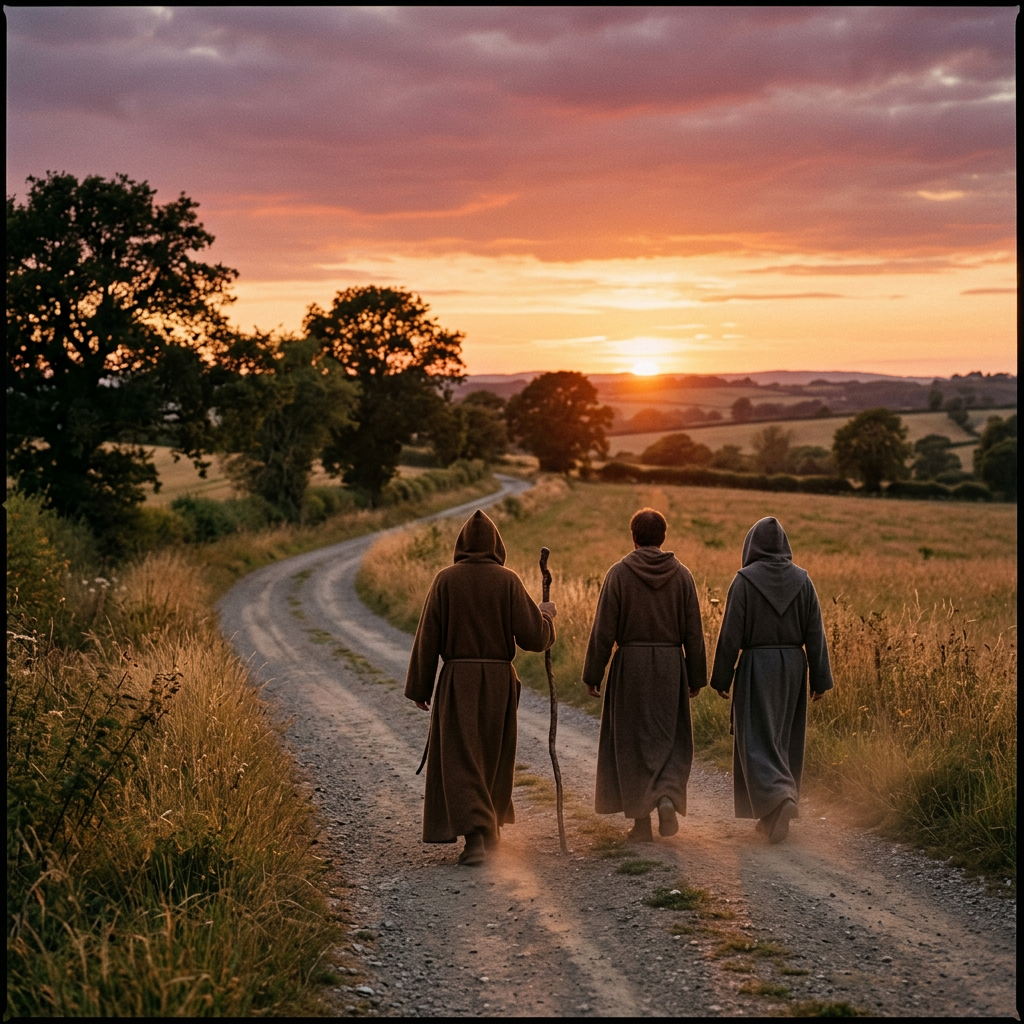
    It is my humble opinion that The Road to Emmaus (Luke 24:13-35) is where some information not written in the Bible comes from by tradition and is passed on in the Catholic Church where Jesus Christ explains all the Old Testament references of Him to them, as well as the meaning of other references which are vague and confusing. But why did they not write it down, a letter possibly entitled: the Lords talk on the way to Emmaus? Because the two disciples were probably illiterate and they, over the course of their lives, passed on the information by word of mouth – Tradition.

    The Ethiopian with Philip (Acts 8:26-40) is why you need an apostolic church, one that springs from Christ and his apostolic supernatural “descendants” (as priests of the Old Testament were descendants of Aaron) to give the correct explanations of the New and Old Testaments and there can really only be one visible apostolic church otherwise you don’t know who to ask. These things make us part of one coherent body. Since the Ethiopian was a eunuch, it shows that Christ eliminated the capability to reproduce (Deuteronomy 23:2) as a qualification for being a member of the mature religion of Catholicism, and enjoying the benefits of being a citizen of heaven, the Beatific Vision.

    The born again quote by Christ means we are born again into the kingdom of God, not as white, black, Asian, Caucasian, Russian, Chinese, Korean, German, Italian, Greek, Japanese, Filipino, Mexican, Columbian, Canadian or American etc. (Galatians 3:28-29) but as Roman Catholics. The tower of Bable (Genesis 11:1-9), the separation of mankind is repaired in the universality (the Greek Katholico meaning universal) of the Roman Catholic Church (event in the Churches name the 2 great ancient civilizations are joined – Greek and Roman) and in the fact that for about 1600 years the common language of the Catholic Church was Latin, and should remain so, so that all priests can have a common language to be able to communicate in emergencies across cultures. This would give them the ability, as in WWII, to help endangered communities, like the Jews, get to safety.  God is the king of all the earth and binds Himself to help all humans, even the ones that have not yet joined his Church. The longer a person lives, that is not in His church, the more time that person has to recognize his church and by joining be saved, and reap the benefits of eternal life in heaven with God, enjoying the Beatific Vision for eternity.

    Originally, for Gods chosen people, because most of society was patriarchal, the mark of conversion to the “Jewish religion” was mostly marked by a permanent physical change, specifically circumcision, for that part of the male body that produced more people for the Jewish religion. For women marriage to a Jewish man made you part of the Jewish religion if you raised your children as Jewish and accepted Jewish law.  With the advent of Jesus and the fulfilment of the Jewish religion in Catholicism, the physical sign was water being pored on the future Catholic while saying “I baptize you in the name of the Father and of the Son and of the Holy Ghost,” both male and female (outwardly indicating both sexes equal as citizens of heaven), and the permanent change being made in the spiritual realm, on the soul of the individual, with the onus being on the individual to realize their need for God and praying and making the reasoned leap of will to follow Gods laws/commandments as clarified by the Messiah, Jesus Christ. In the Old Testament the permanent, visible mark of circumcision.  In fact, Deuteronomy 23:2 states damage to a male’s genitals disqualified a person from entering the assembly of the Lord (found in a Microsoft copilot search on “Bible where does it indicate damage to your genitals disqulified”).  I think the other reason for this restriction is that God wanted to multiply the Jewish race to the point that it would be a significant enough population (all of chapter 23 of the book of Deuteronomy show ways of keeping genetically healthy, and physically healthy as well as not forming alliances with cultures that offer child sacrifice, the practice of which would decrease the Jewish population – which, to be clear, God strongly disapproved of anyway, but culture is a strong influence)  for the world to take notice and catalog its existence, culture and literature (the Old Testament of the Bible) so their would be adequate preparation for His Son, Jesus Christ, and a larger enough and significant enough platform (literary, philosophically and culturally to reflect the character and the desires of God with regard to mankind) to launch the religion of Catholicism to have the ability to save all of mankind.

    God used signs that were predominately physical, like circumcision, I think to show visible commitment by fairly primitive people from the time of Abraham.  Abraham had inner commitment to God, shown by his willingness to sacrifice his son Issac.  The point of that particular exercise was God revealing the commitment, through Abrahams actions, required to God. Being God, He could see Abraham’s heart and commitment but needed it visible to those, in future generations, reading the bible to see the requirement of commitment needed from us.  Being the example of the Ultimate Being, God, though he stopped Abraham, allowed His own son, Jesus Christ, to sacrifice himself to make reparations for original sin.

    Jesus changed the initiation into the fulfilled Jewish religion of Catholicism to one whose main imprint was spiritual, but whose physical sign was temporary because mankind’s reasoning and philosophical sensitivity had evolved to the point that he or she could understand the leap from permanent physical mark to one of permanent spiritual mark/change from one with original sin to one sinless in the sight of God.

    Upon the start of the Catholic Church, the fulfilled Jewish religion, The ability to reproduce became immaterial and so the injunction not to have damaged genitals was no longer an issue.  The whole reason around being able to reproduce arose from the fact that God needed a special people to train as an example in the way He wished to be worshiped and to carry the prophecy of the coming of Jesus Christ, the world’s Messiah, not just the Jews very own exclusive Messiah.  Also to show what was required to be part of God’s people, to follow His commandments closely and not improvise and take literally what God says, not assume and improvise as Moses did in Numbers 20:8-11. God means exactly what He says

       In John 6:26 – 73 (copied from https://www.drbo.org/chapter/50006.htm )From, immediately after the multiplication of the loaves Jesus Christ said this, started in the middle of the verses cited at the beginning of this sentence: Jesus answered them, and said: Amen, amen I say to you, you seek me, not because you have seen miracles, but because you did eat of the loaves, and were filled.  27 Labour not for the meat which perisheth, but for that which endureth unto life everlasting, which the Son of man will give you. For him hath God, the Father, sealed.  28 They said therefore unto him: What shall we do, that we may work the works of God?  29 Jesus answered, and said to them: This is the work of God, that you believe in him whom he hath sent.  30 They said therefore to him: What sign therefore dost thou shew, that we may see, and may believe thee? What dost thou work?

     31 Our fathers did eat manna in the desert, as it is written: He gave them bread from heaven to eat.  32 Then Jesus said to them: Amen, amen I say to you; Moses gave you not bread from heaven, but my Father giveth you the true bread from heaven.  33 For the bread of God is that which cometh down from heaven, and giveth life to the world.  34 They said therefore unto him: Lord, give us always this bread.  35 And Jesus said to them: I am the bread of life: he that cometh to me shall not hunger: and he that believeth in me shall never thirst.

     36 But I said unto you, that you also have seen me, and you believe not.  37 All that the Father giveth to me shall come to me; and him that cometh to me, I will not cast out.  38 Because I came down from heaven, not to do my own will, but the will of him that sent me.  39 Now this is the will of the Father who sent me: that of all that he hath given me, I should lose nothing; but should raise it up again in the last day.  40 And this is the will of my Father that sent me: that every one who seeth the Son, and believeth in him, may have life everlasting, and I will raise him up in the last day.

     41 The Jews therefore murmured at him, because he had said: I am the living bread which came down from heaven.  42 And they said: Is not this Jesus, the son of Joseph, whose father and mother we know? How then saith he, I came down from heaven?  43 Jesus therefore answered, and said to them: Murmur not among yourselves.  44 No man can come to me, except the Father, who hath sent me, draw him; and I will raise him up in the last day.  45 It is written in the prophets: And they shall all be taught of God. Every one that hath heard of the Father, and hath learned, cometh to me.

    [44] “Draw him”: Not by compulsion, nor by laying the free will under any necessity, but by the strong and sweet motions of his heavenly grace.

     46 Not that any man hath seen the Father; but he who is of God, he hath seen the Father.  47 Amen, amen I say unto you: He that believeth in me, hath everlasting life.  48 I am the bread of life.  49 Your fathers did eat manna in the desert, and are dead.  50 This is the bread which cometh down from heaven; that if any man eat of it, he may not die.

     51 I am the living bread which came down from heaven.  52 If any man eat of this bread, he shall live for ever; and the bread that I will give, is my flesh, for the life of the world.  53 The Jews therefore strove among themselves, saying: How can this man give us his flesh to eat?  54 Then Jesus said to them: Amen, amen I say unto you: Except you eat the flesh of the Son of man, and drink his blood, you shall not have life in you.  55 He that eateth my flesh, and drinketh my blood, hath everlasting life: and I will raise him up in the last day.

    [54] “Eat the flesh of the Son of man and drink his blood”: To receive the body and blood of Christ, is a divine precept, insinuated in this text; which the faithful fulfil, though they receive but in one kind; because in one kind they receive both body and blood, which cannot be separated from each other. Hence, life eternal is here promised to the worthy receiving, though but in one kind. Ver. 52. If any man eat of this bread, he shall live for ever; and the bread that I will give, is my flesh for the life of the world. Ver. 58. He that eateth me, the same also shall live by me. Ver. 59. He that eateth this bread, shall live for ever.

     56 For my flesh is meat indeed: and my blood is drink indeed.  57 He that eateth my flesh, and drinketh my blood, abideth in me, and I in him.  58 As the living Father hath sent me, and I live by the Father; so he that eateth me, the same also shall live by me.  59 This is the bread that came down from heaven. Not as your fathers did eat manna, and are dead. He that eateth this bread, shall live for ever.  60 These things he said, teaching in the synagogue, in Capharnaum.

     61 Many therefore of his disciples, hearing it, said: This saying is hard, and who can hear it?  62 But Jesus, knowing in himself, that his disciples murmured at this, said to them: Doth this scandalize you?  63 If then you shall see the Son of man ascend up where he was before?  64 It is the spirit that quickeneth: the flesh profiteth nothing. The words that I have spoken to you, are spirit and life.  65 But there are some of you that believe not. For Jesus knew from the beginning, who they were that did not believe, and who he was, that would betray him.

    [63] “If then you shall see”: Christ by mentioning his ascension, by this instance of his power and divinity, would confirm the truth of what he had before asserted; and at the same time correct their gross apprehension of eating his flesh, and drinking his blood, in a vulgar and carnal manner, by letting them know he should take his whole body living with him to heaven; and consequently not suffer it to be as they supposed, divided, mangled, and consumed upon earth.

    [64] “The flesh profiteth nothing”: Dead flesh separated from the spirit, in the gross manner they supposed they were to eat his flesh, would profit nothing. Neither doth man’s flesh, that is to say, man’s natural and carnal apprehension, (which refuses to be subject to the spirit, and words of Christ,) profit any thing. But it would be the height of blasphemy, to say the living flesh of Christ (which we receive in the blessed sacrament, with his spirit, that is, with his soul and divinity) profiteth nothing. For if Christ’s flesh had profited us nothing, he would never have taken flesh for us, nor died in the flesh for us.

    [64] “Are spirit and life”: By proposing to you a heavenly sacrament, in which you shall receive, in a wonderful manner, spirit, grace, and life, in its very fountain.

     66 And he said: Therefore did I say to you, that no man can come to me, unless it be given him by my Father.  67 After this many of his disciples went back; and walked no more with him.  68 Then Jesus said to the twelve: Will you also go away?  69 And Simon Peter answered him: Lord, to whom shall we go? thou hast the words of eternal life.  70 And we have believed and have known, that thou art the Christ, the Son of God.

     71 Jesus answered them: Have not I chosen you twelve; and one of you is a devil?  72 Now he meant Judas Iscariot, the son of Simon: for this same was about to betray him, whereas he was one of the twelve.

    Here Jesus Christ did not say that He – Almighty God, would feed us the symbol of his flesh, He (Truth itself) said He would feed us his flesh. Just as an animal we eat becomes part of us. By eating the body and Blood of Jesus Christ, He, the uncreated Son of God becomes part of us and as part of the uncreated God (not any of the stuff God created from nothing) our sacrifices, as Christ, can have merit.  This I think is what many Protestants miss that the Catholic religion, through priests sent through an apostolic succession that started with Jesus Christ and his first 12 apostle all of whom, except one, stuck with him after this incident.  This is how and why the Mystical Body of Christ is built, through the Eucharist, Holy Communion, the Bread of Life. If Protestants truly believe man is saved by faith alone they must believe that almighty God can actually make himself bread through the consecrating power of priest/bishop.

    The death on the cross is the consummation of Christs wedding with His bride, part of the mystical body of Christ since He and His bride are one flesh (Genesis 2:24) because His death gives us the privilege of being born again (John 3:1-21), through baptism, into the Kingdom of Heaven as adopted sons and daughters of God.  Just as the marital act, an act produce by the will of at least one of two parties, can, but won’t necessarily produce children, between a man and a woman, Jesus Christs death won’t necessarily produce a citizen of heaven in any particular human being, but just as the marital act, it might, bearing on the acts as parents (if the child is baptized as an infant, like all human infants would have to be trained by parents to be a good citizen of heaven just as a child in the United States is trained to be a good United States citizens, trained in its laws and culture. It is sometimes argued that a parent should give a child a chance to choose on his or her own, but should that child die before reaching adulthood, the salvation of his or her soul would be in question, and by the opinion of most theologians, lost to heaven itself, but destined to reside in an environment natural happiness of limbo – deprived of the Beatific Vision, and it is the parent’s responsibility, having brought that child into existence to try and ensure their existence is the infinitely happy one of heaven) or the individual if baptized as an adult. Just as with Adam and Eve and as with the whole of salvation history, every one is the result of the cooperation of at least 2 people but their ultimate destiny is in their own hands in the case of a reasoning person. As natural life is a gift of our parents to us, supernatural life CAN be a gift to a child that is baptized but dies before reaching the age of reason.  As many great saints show us, men have been given the ability to help save souls, and it is a travesty to possibly let your own son or daughter lose heaven simply because they were not baptized!

  • Books on the Mystical Body of Christ

    The first book is available in reprint and is and intermediate level book for the laity in general interested in this subject.  The name of the Book is “Christ in His Mystical Body” by C. J. Woollen.

    Publisher ‏ : ‎ Kessinger Publishing, LLC (September 10, 2010)

    Hardcover ‏ : ‎ 176 pages

    ISBN-10 ‏ : ‎ 1164482874

    ISBN-13 ‏ : ‎ 978-1164482871

    Nihil Obstat: Ernestus C. Messenger, Ph.D.

                         Censor Deputatus

    Imprimatur: E. Morrogh Bernard

                       Vic. Gen.

    Westmonasterii, Die 15A Januarii, 1948

    A more concise book and more elementary book on the subject is “The Mystical Body” by Father Francis.

    ASIN ‏ : ‎ B01MG3YHOP

    Publisher ‏ : ‎ The Seraphic Press (January 1, 1962)

    Paperback ‏ : ‎ 45 pages

    Nihil Obstat: John A Schulien, S.T.D.

                         Censor Librorum

    Imprimatur: +Gulielmus E Cousins, D.D.

                         Archiepiscopus Milwauchiensis

    Milwauchiae, die 12a Januarii, 1962

    A more technical book that deals more generally with the Theology of St. Paul but focus in large part on the mystical body of Christ is “The Church in the Theology of St. Paul” by L. Cerfaux, Below is the identification of a recent reprint and the approbations are from my 1959 Herder edition..

    Publisher ‏ : ‎ Hassell Street Press (September 9, 2021)

    Hardcover ‏ : ‎ 434 pages

    ISBN-10 ‏ : ‎ 1013595068

    ISBN-13 ‏ : ‎ 978-1013595066

    Library of congress catalog card number:59-5741

    Nihil Obstat: Carolus Davis, S.T.I.

                         Censor Deputatus.

    Imprimatur: E. Morrogh Bernard,

                       Vic. Gen.

    Westmonasterii, Die 5 Martii, 1959

    Another book more focused on the modern world is “The Mystical Body of Christ in the Modern World” by Father Denis Fahey. Once again the identification of a recent reprint and the approbations are from my 1935 Brown and Nolan Limited copy.

    Publisher ‏ : ‎ Loreto Publications (July 21, 2018)

    Paperback ‏ : ‎ 440 pages

    ISBN-10 ‏ : ‎ 1622921224

    ISBN-13 ‏ : ‎ 978-1622921225

    Nihil Obstat: Gulielmus Coffey, S.T.L.

                         Censor,

    Imprimi Potest: +Jeremias,

                               Episcopus Waterfordiensis et Lismorensis

    Waterfordiae, doe 19a Februarii, 1935

    Finally, we have “The Mystical Body of Christ and the Reorganization of Society” by Father Denis Fahey. Again from a recent reprint with the Imprimatur from my March 1978 Forum Press facsimile Reprint edition.

    Publisher ‏ : ‎ Loreto Publications (February 1, 2018)

    Paperback ‏ : ‎ 822 pages

    ISBN-10 ‏ : ‎ 1622921089

    ISBN-13 ‏ : ‎ 978-1622921089

    Imprimi potest: D. Murphy, C.S.Sp.,

                             Praep. Prov.  Hib.

    Unorunatyr: +Daniel

                          Episcopus Coreagiensis

                          Coreagiae, Jan. 26, 1943.